
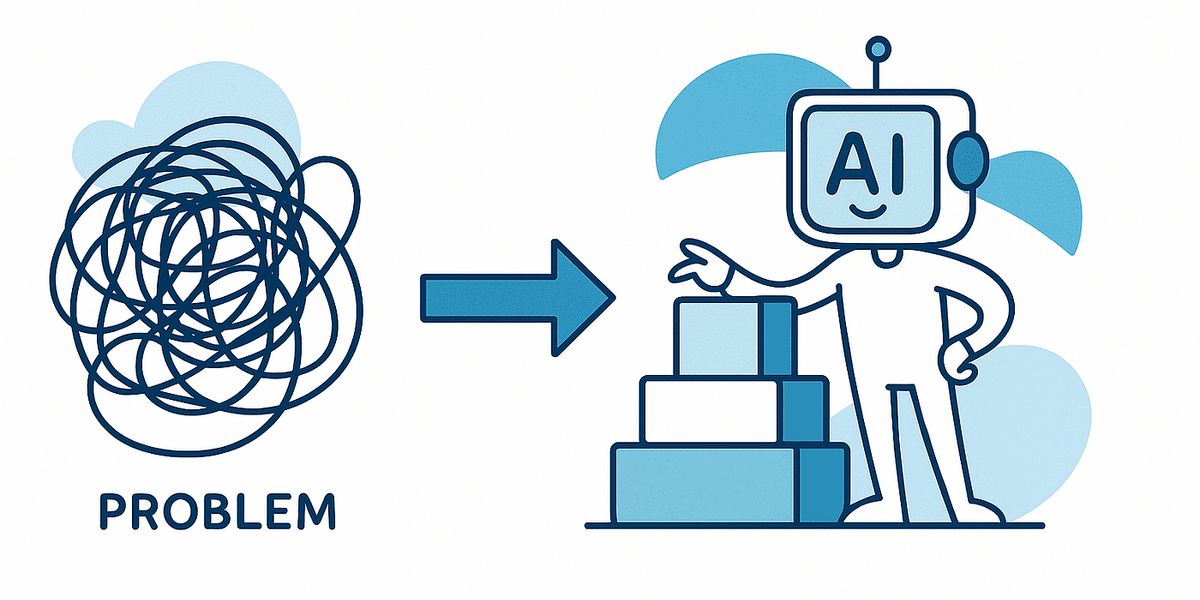
A company invests in new AI tools and the expectation already is straightforward. Things will get faster, work will get easier and the team will finally have more breathing room.
But a few weeks later, many of the same frustrations are still there. Work is still delayed, approvals still take too long, information is still hard to find. The calendar is still full of meetings that should not need to happen.
The technology is in place and everything is working fine but the problems are still there.
In many cases, the issue was never the technology.
Why AI gets blamed
When results do not appear quickly, the instinct is often to question the tool. Maybe it was the wrong platform or maybe the implementation was off. Maybe AI is not as useful as everyone said.
But technology does not operate like that. It operates inside existing workflows. If those workflows are already inefficient, AI simply enters an inefficient system and works within it. The underlying problem stays exactly where it was.
Technology does not automatically fix complexity. It inherits it.
What process problems actually look like
Most organisations have them. Too many approval layers for decisions that should be straightforward. Unclear ownership over work that crosses teams. Tasks being duplicated because systems do not connect. Information stored in three different places with no clear source of truth. Constant status update meetings that exist only because nobody knows where things stand.
These issues slow organizations down every single day. And many companies have lived with them long enough that they stop noticing. The friction becomes normal. The workarounds become standard practice.
Then AI arrives, and the expectation is that it will fix what the organization never stopped to examine.
What happens when AI enters a broken process
This is where things get interesting. AI can genuinely make individual tasks faster. That part is real.
But if the workflow itself is inefficient, the overall result often barely improves. Reports get generated faster but still require five rounds of approval before anyone acts on them. Information gets created more quickly but still ends up in disconnected systems where nobody can find it. Decisions get supported by better data but still wait for three unnecessary meetings before moving forward.
The speed of one step improves. The friction in the rest of the process stays the same.
AI can accelerate work. It cannot automatically redesign how work flows through an organization.
What successful companies do differently
The organizations that get the most from AI tend to look at their processes before they look at tools. They ask where work slows down, where decisions get delayed, where information gets stuck, and which steps exist more out of habit than necessity.
Once those areas are identified, they use AI to improve them specifically. The technology follows the process design. That sequencing makes an enormous difference in what actually gets better.
About Wave Group
Wave Group always begins by understanding how an organisation actually operates before recommending any technology solution. The focus is on identifying where friction exists, where workflows can be improved, and where AI can create measurable value once the foundation is right. Sometimes the biggest opportunity is not a new tool. Sometimes it is a better process.
AI is one of the most powerful technologies available to businesses today.
But it creates the most value when it supports a designed operation, not when it is asked to compensate for one that is not.
Organizations that improve their processes first tend to get far more from AI than those who treat technology as a shortcut.