
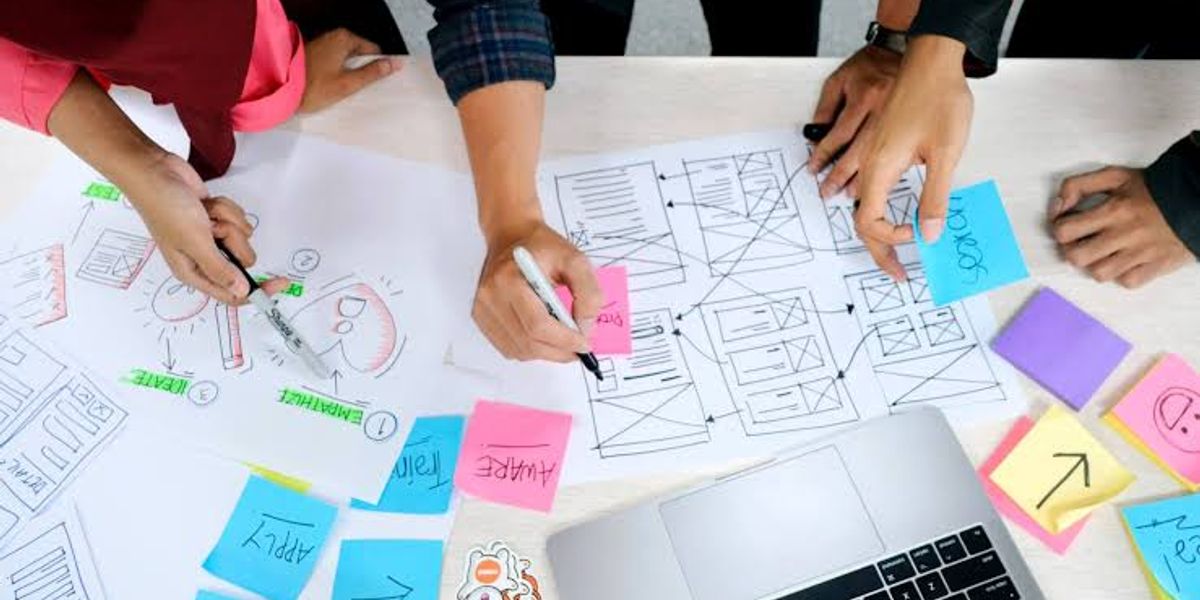
Think about how many technologies businesses have adopted over the last twenty years. New software replaced old software. Communication platforms came and went. Cloud computing changed how organisations stored and shared information. Mobile apps transformed how customers interacted with businesses. And now AI is reshaping how work gets done at every level.
Every few years something new arrives and demands attention.
Many of those tools change significantly within a short time. Some disappear entirely. Yet certain companies continue performing well regardless of which technology becomes dominant in a given year.
The reason is not that they chose better software. It is that their success is built on something deeper than software.
Technology changes. Great business design lasts.
Technology will always keep moving
Change is no longer a periodic disruption. It is a permanent condition. New AI models appear every few months. Software that felt modern eighteen months ago already feels dated. Customer expectations shift as quickly as the tools that serve them. Markets become more competitive as the cost of entry drops and new players can build capable operations with smaller teams than ever before.
Businesses cannot afford to redesign themselves from scratch every time something new arrives. The organisations that try to chase every technological shift often find themselves perpetually behind, always implementing yesterday's innovation while the next one is already appearing on the horizon.
What they need instead is a foundation that makes adaptation easier rather than harder each time something changes.
Great business design outlasts any individual technology
The qualities that make a business genuinely well-designed do not depend on which software is currently popular.
Connected information that flows naturally between teams rather than sitting in isolated systems. Clear ownership so that decisions do not slow down at the boundaries between departments. Simple workflows that move work forward without unnecessary steps. Strong decision-making processes that give leaders what they need when they need it. Transparent operations where everyone can see what is happening and why. Systems that work together naturally rather than requiring people to carry information between them manually.
These qualities remain valuable regardless of what technology arrives next. In fact, they make every new technology easier to integrate. When the organisational foundation is strong, new tools can be adopted faster because there is a clear and well-designed operation ready to receive them. The technology slips in and strengthens what is already working rather than colliding with years of accumulated complexity.
Why this creates long-term competitive advantage
Businesses built on strong operational design can adopt new technology faster than competitors still working through outdated processes. They can improve continuously because their operations were designed to be improved rather than simply to maintain the status quo. They respond to customer needs more quickly because information flows freely and decisions move at the right speed.
They scale without creating the kind of overhead that eventually slows large organisations down. And they remain competitive through changing markets because their advantage is not tied to any single platform. It comes from how the business itself is designed to operate.
Technology creates opportunities. Business design determines whether those opportunities actually become results.
Building for what comes next
Organisations that have invested in modern operating models already have a significant advantage. Organisations that have removed unnecessary friction from their workflows are positioned to introduce technology that accelerates genuinely valuable work rather than complicated processes that were never examined. Together, those foundations create businesses that do not simply perform well today but are built to keep performing well as the environment continues changing.
That is the real goal of any serious investment in digital transformation. Not to implement a specific AI tool or automate a particular workflow. To build a business that is designed to evolve alongside whatever technology emerges next.
About Wave Group
Wave Group helps organisations build businesses designed for long-term adaptability. That includes improving operating models that were built for a different era, redesigning workflows that have accumulated unnecessary friction, integrating AI where it creates measurable value, using blockchain where transparency and trust strengthen operations, and building connected digital systems that continue evolving alongside the business. The objective is never simply implementing today's technology. It is helping businesses build foundations that remain valuable as technology continues changing around them.
Technology will never stop evolving. New AI capabilities will appear. New platforms will emerge. New ways of working will continue developing in directions that are difficult to predict today.
Businesses cannot anticipate every innovation. But they can prepare for them.
The organisations that thrive over the next decade will not be the ones chasing every new tool. They will be the ones designed to adapt to whatever comes next. Because technology may change every year. Great business design keeps creating value for years to come.