
For a long time, competitive advantage was relatively straightforward to understand. Bigger companies had more resources. More resources produced better results. Size created barriers that smaller competitors struggled to overcome.
That logic worked for decades. But it is becoming less reliable.
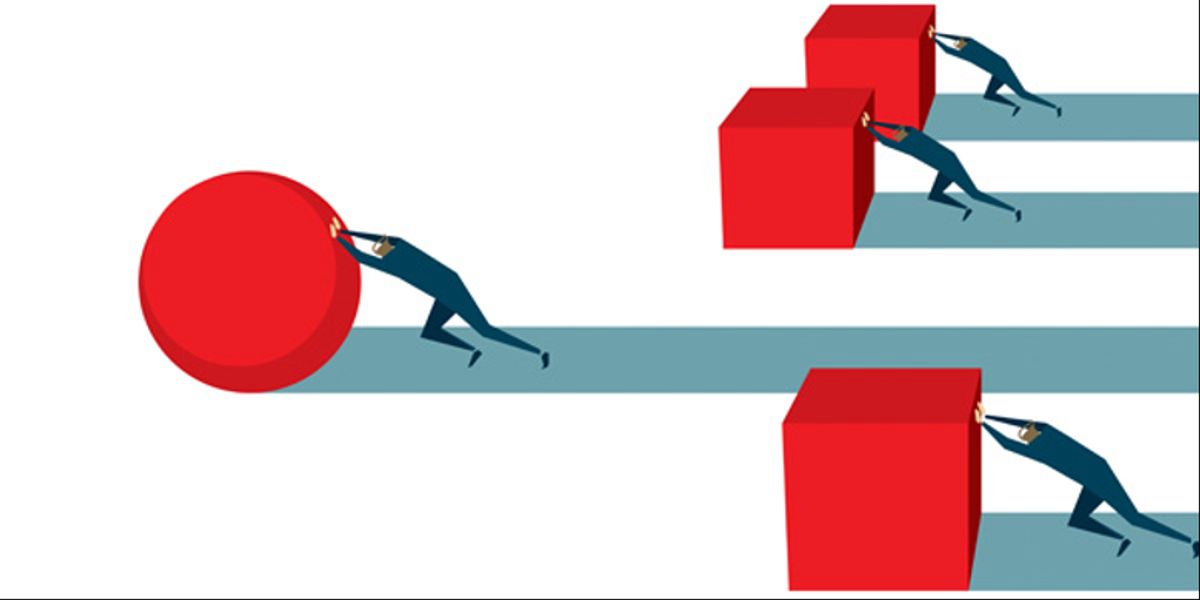
Today, some of the fastest-growing companies are not the largest ones. And some of the largest companies are being outpaced by organisations a fraction of their size. Something in the equation is changing.
The old sources of advantage
Traditional competitive advantages were built on things that were genuinely difficult to replicate. Larger budgets. Bigger teams. Physical infrastructure. Proprietary access to information. Dominant market positions built over many years.
These created real barriers. If a competitor did not have the capital, the network, or the scale, they simply could not compete at the same level. The advantages were durable because they were expensive and slow to build.
Technology is changing that.
What AI and technology have changed
Many capabilities that once required significant resources are now far more accessible. Smaller organisations can analyse data, automate workflows, serve customers at scale, and build sophisticated systems without the teams that would have been necessary before.
AI in particular is giving more organisations access to capabilities that were previously available only to large enterprises. The gap between what a ten-person company and a thousand-person company can do has narrowed in ways that were not possible just a few years ago.
When the tools become widely available, the tools stop being the advantage.
The new competitive advantage
What separates the strongest organisations today is less about what they have and more about how they operate.
They learn quickly and act on what they learn. They adapt to change without losing momentum. They make decisions faster because their systems and structures allow it. They remove unnecessary complexity rather than managing around it. They build environments where people can do their best work instead of spending that energy on coordination and overhead.
The advantage is no longer simply having more resources. It is using the resources available more effectively than anyone else.
Why execution matters more than ever
Access to technology is becoming common. What remains genuinely rare is execution.
Many organisations have access to the same tools, the same platforms, and the same information. Very few use them equally well. The difference almost always comes down to leadership, operational clarity, and a culture willing to adapt continuously.
A clear strategy poorly executed produces weak results. A good enough strategy executed exceptionally well produces strong ones. In an environment where technology gives more companies more capability, execution is what separates the ones that move forward from the ones that stay still.
About Wave Group
Wave Group helps organisations build the capabilities that create modern competitive advantage. That includes AI strategy, digital transformation, workflow design, automation, blockchain infrastructure, and operational improvement. The goal is not simply adopting technology. It is building organisations that can adapt, improve, and compete more effectively as the environment around them keeps changing.
The next generation of market leaders may not be defined by size alone.
They will be defined by how quickly they learn, how effectively they adapt, and how well they turn technology into real business results.
The competitive advantage of the future is already taking shape. The question is whether organisations are building for it today.