
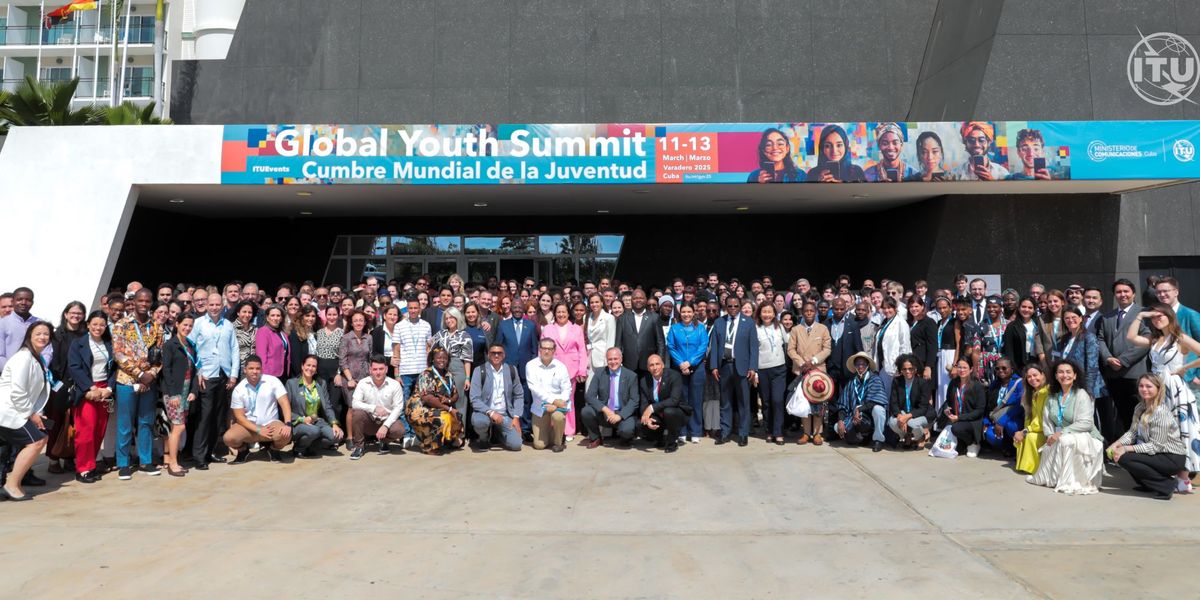
At the UN International Telecommunication Union Global Youth Summit 2025 in Varadero, Cuba, leaders, technologists, and visionaries from around the world gathered to explore one critical question: How do we empower youth in a rapidly digitalizing world?
Speaking on the Youth Digital Empowerment panel, Wave Group CEO Gala Tomovska offered a powerfulc perspective the one that bridges technology, equity, and global opportunity.
“AI will not replace human potential; it will amplify it. It will not centralize power; it will distribute it. And it will not be a privilege; it will be a right.”
These words captured the heart of her message: that artificial intelligence isn’t just about machines or efficiency but it’s about shaping a future where every young person, regardless of geography or income, has a seat at the table.
What Even Is AI? Artificial Intelligence is not magic, it’s logic. At its core, AI is an algorithmic system designed to process data, recognize patterns, and make predictions. But the brilliance of today’s AI tools, like ChatGPT and Claude, lies in how they simulate human-like interaction and unlock new ways of learning, working, and creating.
Still, we are only at the beginning. AI has the potential to transform education, employment, and innovation but only if we build it inclusively.
Access Beyond the Elite
Around the world, AI is already personalizing education and helping youth prepare for careers that didn’t exist a decade ago. But access remains unequal.
“AI must reach every young person, not just those with the resources to access it,”
In many communities, infrastructure is lacking. In others, language, culture, or cost are barriers. And yet, these are precisely the places where AI could have the most transformational impact. Wave Group’s mission is to help break these barriers through accessible, scalable, and ethical AI solutions.
The Role of Governments and Technology Leaders
For AI to serve all youth, it cannot evolve in isolation. Blockchain and other supporting technologies must advance in tandem to ensure decentralization and transparency. The concern was raised about a future where a handful of corporations control the answers to critical life decisions, from what we eat to what career we pursue.
Governments, it was emphasized, must prioritize digital literacy in education systems, especially in regions where connectivity and opportunity remain uneven.
AI must be “a tool of the people, by the people, and for the people.”
A Framework for Inclusive AI
The speech centered around three guiding principles that can shape a more just and inclusive AI future:
Access – Making AI tools, platforms, and education universally available by removing financial, linguistic, and geographical barriers.
Agency – Empowering young people not just to use AI, but to build it, tailoring solutions for their own communities and realities.
Accountability – Ensuring AI reflects the values of the many, not the biases of the few, through ethical frameworks, inclusive data, and transparent governance.
Wave Group’s Commitment
At Wave Group, we understand that the promise of AI lies not just in its intelligence, but in its impact. We are developing AI-driven tools that help governments, schools, and businesses make smarter decisions, tailored to local realities.
More importantly, we believe in building technology that amplifies human potential—not replaces it. Our work is rooted in the idea that everyone, especially youth, deserves the tools to build their own future.
Looking Ahead
The Youth Digital Empowerment session was more than a panel, it was a call to action. It reminded us that shaping the digital future is not the job of a few experts, but a shared responsibility.

As Wave Group CEO Gala Tomovska powerfully concluded:
“Let’s not just prepare young people for the future. Let’s make sure they own it.”