
Ask someone what makes a business successful and they will probably mention a great product, a talented team, or a strong brand. All of those things matter and none of them are wrong.
But there is another factor becoming just as important as any of them and that is how the business itself is designed.
The companies creating the most value over the next decade will not simply be the largest ones. They will be the ones designed to operate better than everyone else.
Growth used to mean adding more
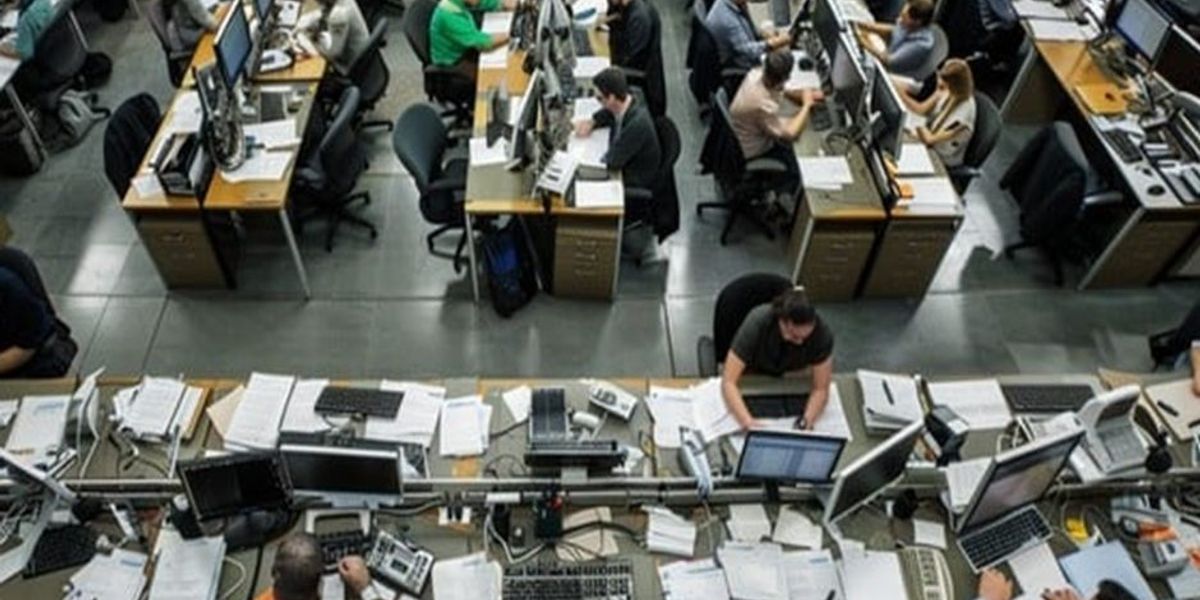
For most of business history, scaling followed a familiar and probably unavoidable pattern. More customers meant more employees and they needed more managers. More managers created more meetings and more coordination. And somewhere along the way, the overhead of running the business started competing with the business itself for everyone's time and attention.
Each addition made sense when it was introduced. Together they created organisations where growth and complexity were inseparable. Businesses accepted this as the natural cost of becoming larger.
That assumption is worth questioning now.
Business design is becoming the real advantage
The most effective organisations today are asking different questions from the ones their predecessors asked. Not how do we add more, but how do we design this better.
What would this workflow look like if it were built from scratch today rather than inherited from ten years ago? Which approvals exist because they genuinely reduce risk and which exist because nobody ever removed them? Are the systems people depend on connected to each other or are employees spending their time carrying information between platforms that should be talking directly? Is information available when people need it or does getting it require a request, a wait, and a meeting?
These questions are design questions. They are also some of the most valuable questions a business leader can ask right now.
Good design removes friction before technology accelerates it. That sequence matters enormously. A well-designed workflow that AI then supports becomes genuinely faster. A poorly designed workflow that AI accelerates simply creates faster confusion.
Technology supports the design but does not replace it
AI, automation, and blockchain are genuinely powerful. They can transform how businesses operate in ways that were not possible before.
But they are not the foundation. They perform best inside organisations that already have clear workflows, connected information, defined ownership, and transparent processes. They strengthen what is already well built. They cannot compensate for organisational design that was never examined.
Technology is the engine and business design is the roadmap. A powerful engine without a clear direction does not take you where you want to go. The businesses that understand this distinction will make better use of every new capability that technology provides, because the organisation underneath is ready to receive it.
Why this creates durable competitive advantage
Markets are moving faster and the pace of change is not slowing. Businesses designed for adaptability respond to customers before their patience runs out. They launch new ideas sooner and learn from results while competitors are still seeking approval to begin. They integrate new technologies more easily because their operations were designed to evolve rather than to stay fixed.
Their advantage compounds because every improvement they make builds on a foundation that was designed to support improvement. Organisations built for complexity experience each new change as a disruption. Organisations designed for adaptability experience each new change as an opportunity.
About Wave Group
Wave Group helps organisations design businesses for the next generation of work. The focus is on improving operations, connecting systems, integrating AI where it creates measurable value, using blockchain where trust and transparency matter most, and building organisations that are simpler, smarter, and more adaptable than the structures they replace. The goal is never to add technology for its own sake. It is to design businesses that perform better because every part works together toward the same outcome.
The future will not reward businesses simply because they are larger.
It will reward businesses that are better designed. Organisations that reduce friction, make better decisions, learn continuously, and adapt with confidence.
Technology will keep evolving. The businesses that succeed will be the ones built to evolve with it.